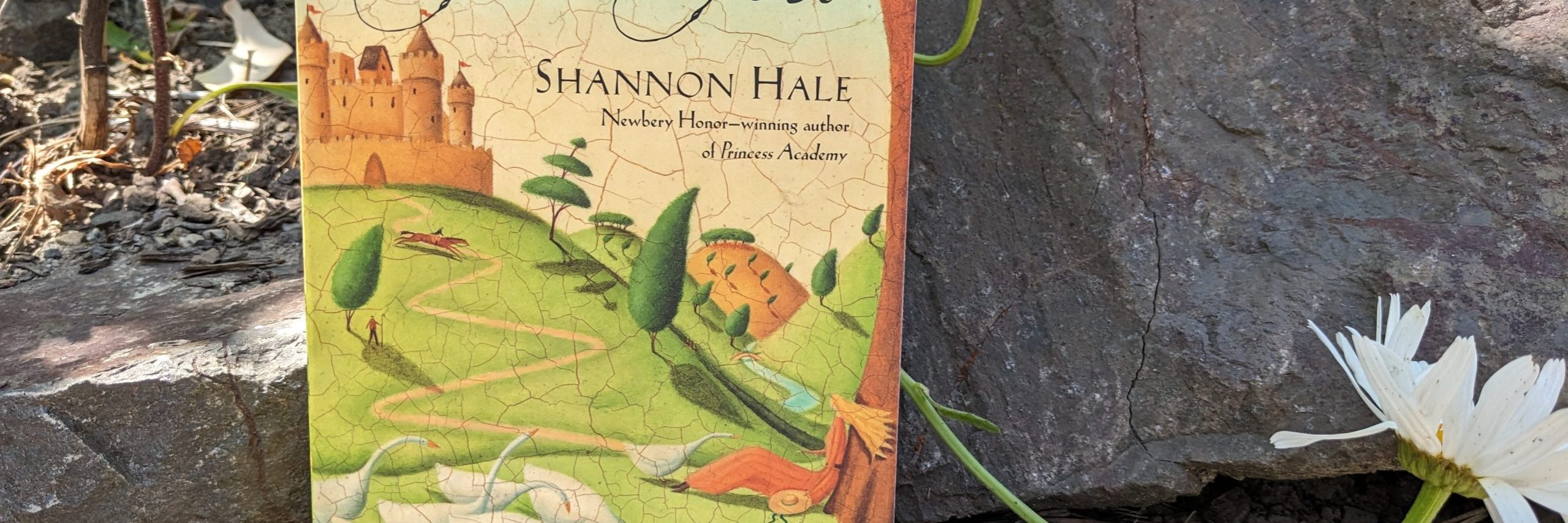
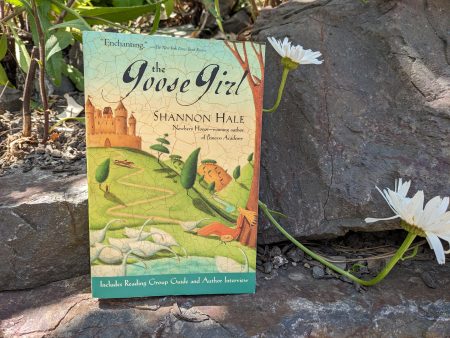
 The Goose Girl
by Shannon Hale
The (a) story is about Princess Anidori-Kiladra Talianna Isilee, who lives in the kingdom of Kildenree with her family and her beloved horse. Timid and soft-spoken, Ani would much rather spend her days riding and using her wild gifts to speak with the animals that live within the castle walls than sip tea, fake a smile, and force polite conversation with fellow courtiers. But everything she has ever known suddenly changes when tragedy strikes her family, and she is forced to leave her home for the neighboring kingdom of Bayern.
On top of everything else, a vicious betrayal soon leaves Ani lost and alone in an unfamiliar land, surrounded by unfamiliar faces. Now, for the first time in her life, the princess must use her own wits and her unique talents to save not only herself, but both kingdoms from treachery.
But while a princess has all the power she needs at her fingertips, who will listen to a lowly goose girl?
The (A) story is about growing up. Not only the typical growing pains of losing the ones you love and having to go out into a strange and unfamiliar world, but also the harsher pains that sometimes come our way in the process: the emotional pains of betrayal; of not being listened to; of learning to fly by first being pushed, and then realizing in the midst of falling that no one is waiting to catch you.
It is also about friendship—specifically, true friendship. It is about finding those who will listen to you, and who will fight to protect you instead of (sometimes literally) stabbing you in the back. And underlying the theme of friendship is also a theme of leadership: of the types of people who sow peace and the types of people who sow ruin, and how they affect those who choose to follow them.
(In case this, apparently, needs saying, those who inspire and encourage violence should not be given a leadership position. Ever.)
I honestly did not remember much of this book from the first reading…and I think I know why. As someone who was a lot like Ani growing up, some of the traumas she experiences throughout her adventures really strike a chord with me—particularly the experience of coming head-to-head with someone who is a master of “people-speaking.” And many of the situations that I didn’t identify personally with were still pretty traumatizing for someone who was—I think—about in middle-school at the time. So, I think I actually repressed most of this story.
(However, I will say that one detail that did stick with me turned out to be a humorous mis-reading that, in fact, made yet another traumatizing thing much less traumatizing. If you read the book, just keep in mind that I replaced the word nails with snails.)
That being said, the second time around, I was more capable of finding comfort in the positive aspects of this story: how Ani grows as a leader, for one thing; the true friends she makes along the way for another. And, aside from all the traumatizing stuff, it’s actually quite a cozy read.
One thing that bugs me though is the author’s use of double contractions. Look, I’ll be the first person to admit they throw casual contractions into period-piece stories…but there’s a lot more to be forgiven from throwing in a couple of can’ts vs. throwing in several shouldn’t’ves and I’d’ves. It just made me stumble over the narrative every single time.
How do I feel about the story overall? It’s fine. It’s not a piece of writing that overtly impresses me, but it’s not underwhelming, either. As I said: it’s cozy. I will probably read it again eventually, although there are others I would certainly re-read first.
Give it a read this summer, and see what you think.