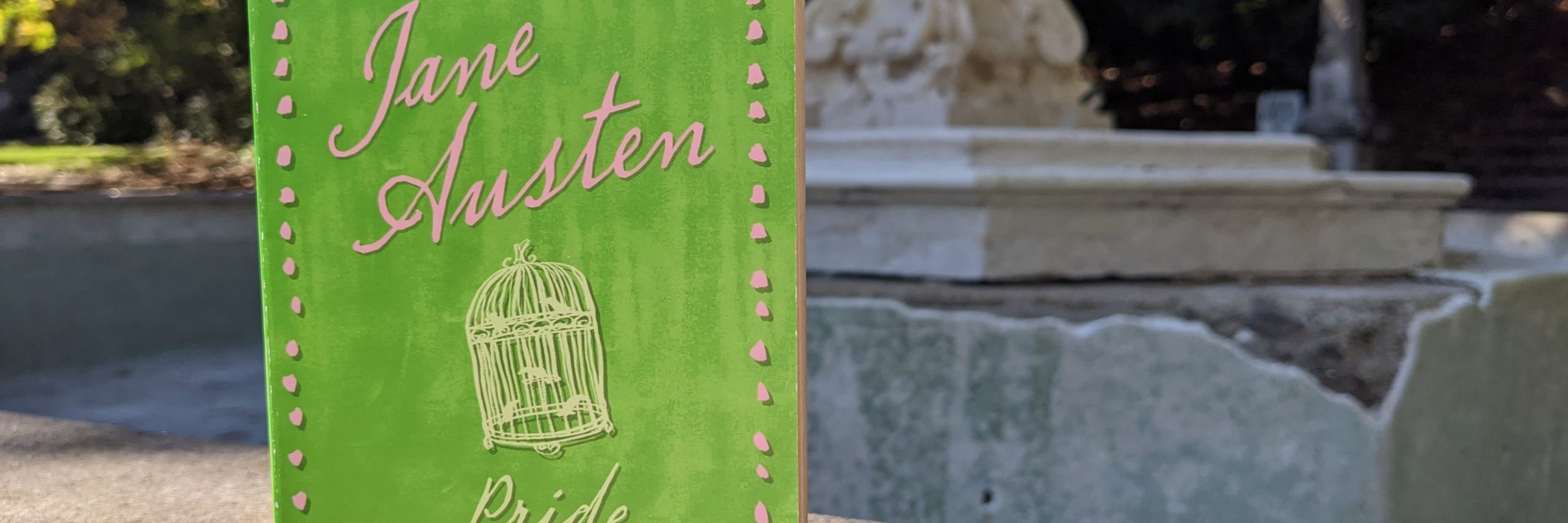
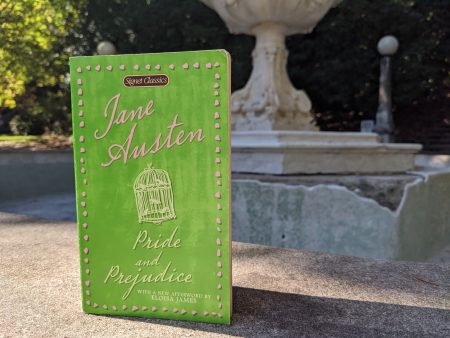
Callum Quinn, © 2019
Pride and Prejudice
By Jane Austen
The (a) story follows Elizabeth Bennett, the second of five daughters in a semi-wealthy family with no male heir to inherit the estate once Mr. Bennett passes. Mrs. Bennett, their mother—and a devious woman—puts pressure on them all to marry well and save the family from misfortune. When the very wealthy Mr. Bingley moves into a nearby estate it looks like a great opportunity to see one of the girls married off into a marvelous fortune. However, it is his even wealthier and seemingly ill-tempered friend, Mr. Darcy, whose life forever becomes entwined with Elizabeth’s.
Mr. Darcy is an extremely disagreeable man, and Elizabeth immediately finds herself at odds with him. Yet, Darcy cannot help but be attracted to Elizabeth’s spirit and beauty, and as the story goes on Elizabeth begins to see the more amiable sides of Darcy’s character. Amid the grand parties, schemes, fights, flirtations and class rivalries at the turn of the nineteenth century, the two begin to look past their expectations and established views and follow their hearts, eventually and inevitably leading them to each other.
The (A) story is about—well, pride and prejudice. And, of course, the obstacles established by social class, and the value of finding true love in a world full of other peoples’ expectations. As an exceedingly wealthy man, Darcy’s fault is that he is gripped by his prejudice and sense of place as a member of high society. Further along in the story he professes himself in love with Elizabeth in spite of her vulgar mother, lower-class family and miniscule prospects. Elizabeth, in return, is blinded by her pride and avows never to think kindly of or expect any good from such an arrogant man. Luckily for us, however, during the course of the story they both learn the error of their ways, and come to realize the harm in the pride and prejudices of those around them.
I originally read this book soon after my junior year in high school. I remember because my first experience with the story was during a Drama Club field trip, and we were able to catch a stage-version of it at the Oregon Shakespeare Festival. Afterward, I was determined to read the book.
Right away I was surprised by how easy it was to understand. Granted, my edition explains at the beginning that any archaic spelling has been updated, but the language itself is not too unfamiliar to grasp. A few times I had to re-read a passage just to make sure I understood what was happening, but it usually only took a second try.
I adored this story, and after re-reading it as an adult, I still do. It is easy to fall in love with Jane Austen’s descriptive landscapes and memorable characters. I’ve always been impressed by the author’s ahead-of-her-time philosophies and headstrong lead, and the romance is beautiful without being mushy or in the reader’s face. If I have to complain at all, the fluidity of the dialogue and descriptions can sometimes leave it a little vague as to who is talking. Several times this was part of the reason why I had to go back and re-read passages. There are also a couple moments when a casual dialogue seems to go on longer than it needs to; it was hard to grasp any point to it other than to show the characters’ differing opinions from each other, though it had already been long established. However, except for these two criticisms, that’s about it.
Pride and Prejudice is one of my favorite stories to get lost in. It takes readers back to a simpler time where the biggest outlets for entertainment were going for walks in the country, reading or listening to music, dancing, and partaking in battles of wits with the neighbor’s pompous best friend. In this wide, toxic world of ours, there is something about this story that seems pure and untouched by the persistent wear and tear of our modern age.