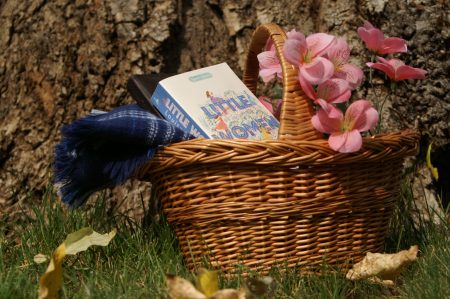
Callum Quinn, © 2020
Little Women
Louisa May Alcott
The (a) story follows the lives of four young women growing up in nineteenth-century New England. Based heavily on the author’s life, Little Women is the tale of Meg, Jo, Beth, and Amy: four sisters who are completely diverse in personalities, dreams, desires, and goals, yet who, at the heart of things, share a bond and a love that is unbreakable. When we begin their story, they are on the cusp of childhood. And as the book unfolds we experience their laughter and their pain, their hope and heartache as their desires and personalities change within the complexities of womanhood.
The (A) story of Little Women is as varied as our cast of characters. At the heart of things, it is about familial love, demonstrating within the workings of the March family that any trials and tribulations can be dealt with as long as patient and gentle love is our driving force. On the outskirts of this lesson is the moral journey, taken by each of the girls as they face their individual trials on the way to transcendence (or, in the case of this story, womanhood). These moral journeys are reflected by both the author’s and the characters’ continued allusions to The Pilgrim’s Progress, a story of one man’s journey from Earth to Heaven. Such allusions are brought into play from the very first chapter, in which the girls’ beloved Marmee (mother) encourages them to “play pilgrims,” and do their best to rid themselves of their individual “burdens” by the time their father returns home from the war. Each girl promises to do her best, but the road is difficult, as is demonstrated over the course of the book by Amy’s trip through the “Valley of Humiliation,” Meg’s trial in the “Vanity Fair,” and Jo’s confrontation with her personal “Apollyon.”
However, rooted into these lessons are also abundant examples of feminine strength and independence. This is seen especially clearly through the personalities of the four women. The first is Meg, the more down-to-earth, no-nonsense eldest who dreams of a life of luxury; the second is Jo, who is rather brash, loud, and adventurous, whose main goal is to become a famous writer and travel the world; next is Beth—the more “glass is half-full” sister who dedicates herself to her home and her family and longs for nothing more than her piano; and Amy, the pretentious artist who dreams of excellence and fame. While being young and bonded by sisterhood, each woman is unique in her wants, needs, and talents. Straying far from the outdated, close-minded notions that one woman is just like any other, Amy, Jo, Meg, and Beth stand resolute in their individuality throughout the book. Even as they grow and change they maintain their own special ways of looking at the world, learning from mistakes, and reaching their goals. Yet, they never lose sight of that sisterly bond, often coming together again to solve a problem or deal with a heartache, even as the years go by.
More examples of feminine strength are displayed in how the women treat and are treated by the men they surround themselves with. For starters there is Mr. March, the father returned from war who views their home, not as his kingdom, but as a responsibility shared between them all. This is reflected in Marmee’s speech to one newly married daughter, in which she states the secret of a good marriage: “Each do our part alone in many things, but at home [Mother and Father] work together, always.” This dialogue indicates a sense of balance within the home—that no duty is strictly the woman’s job or the man’s job—as well as reinforces the independent minds of March women by indicating that Marmee does things outside of husband and children. Mrs. March is not a drudge or merely something pretty for Mr. March to look at when he comes home; she is a valued member of a household, and this knowledge comes into play for her daughters as they grow and start up households of their own.
Then there is their friend and neighbor, Theodore “Laurie” Laurence, whom the girls take under their wing early in the story. He quickly becomes a dear, brotherly figure for the sisters as well as a permanent acquaintance for the family. But once his feelings deepen for one of the sisters, he is gently turned down, as she cannot find it within her to love him the same way and refuses to force herself to try, as women of that period were apt to do. This demonstrates the honest differences between friendship and love (especially between inexperienced youths), as well as the transforming power a true, romantic partnership has, once we see Laurie’s own failings remain unchanged by the love of one sister, and later changed by another.
What holds this story in our hearts today is how real and relatable these little women are. As is made clear from the beginning, they are far from perfect. They squabble, they poke fun at each other, and they sometimes put their own selfish wants ahead of other matters. But they are also ambitious, and willful, and just as frequently as they make mistakes, they learn from them. And making these errors is part of what helps them grow and change for the better. These little women are genuine in the way they live their lives, and oftentimes a reader may catch a glimpse of themselves within these pages, and laugh or cry at the resemblance.
My first experience with this story was the latest movie, released in theaters in 2019. I had yet to read the book, but I’d heard the story referenced in enough places to have some major plot-points spoiled for me (Anyone else watch Friends?). However, the movie was the catalyst for my adoration with this story. Immediately I grew attached to Jo, the aspiring author whose dreams and temperaments were uncannily familiar. But as much as I loved Jo, I couldn’t help but be charmed by Amy, Meg, Beth, and of course, Marmee, as well.
I finally snagged my own copy of the book a few months later. While it was not a quick read, as some books tend to be for me, it was tranquil; I felt free to take my time and enjoy every moment for all it was worth—and I did. Since finishing it, I have already re-read through favorite scenes and dialogues. Even now, my attachment to these little women grows.
Not only do I believe this is a story every little woman should read; I believe this is a story everyone should read. If not for the delightful characters and the lessons woven in-between, then for a true, unfiltered glance into the workings of young women’s minds as they grow and learn and come into adulthood.